Compassionate counseling for couples offers a safe, nonjudgmental space where partners can slow down, feel heard, and rebuild connection. For many couples in Westlake Village and across California, reaching out for support feels like a vulnerable first step. However, working with a therapist who blends warmth with decades of clinical experience can turn that vulnerable step into lasting change. This guide explains what compassionate counseling for couples looks like, who it helps, and how to know when it is time to book a free consultation.

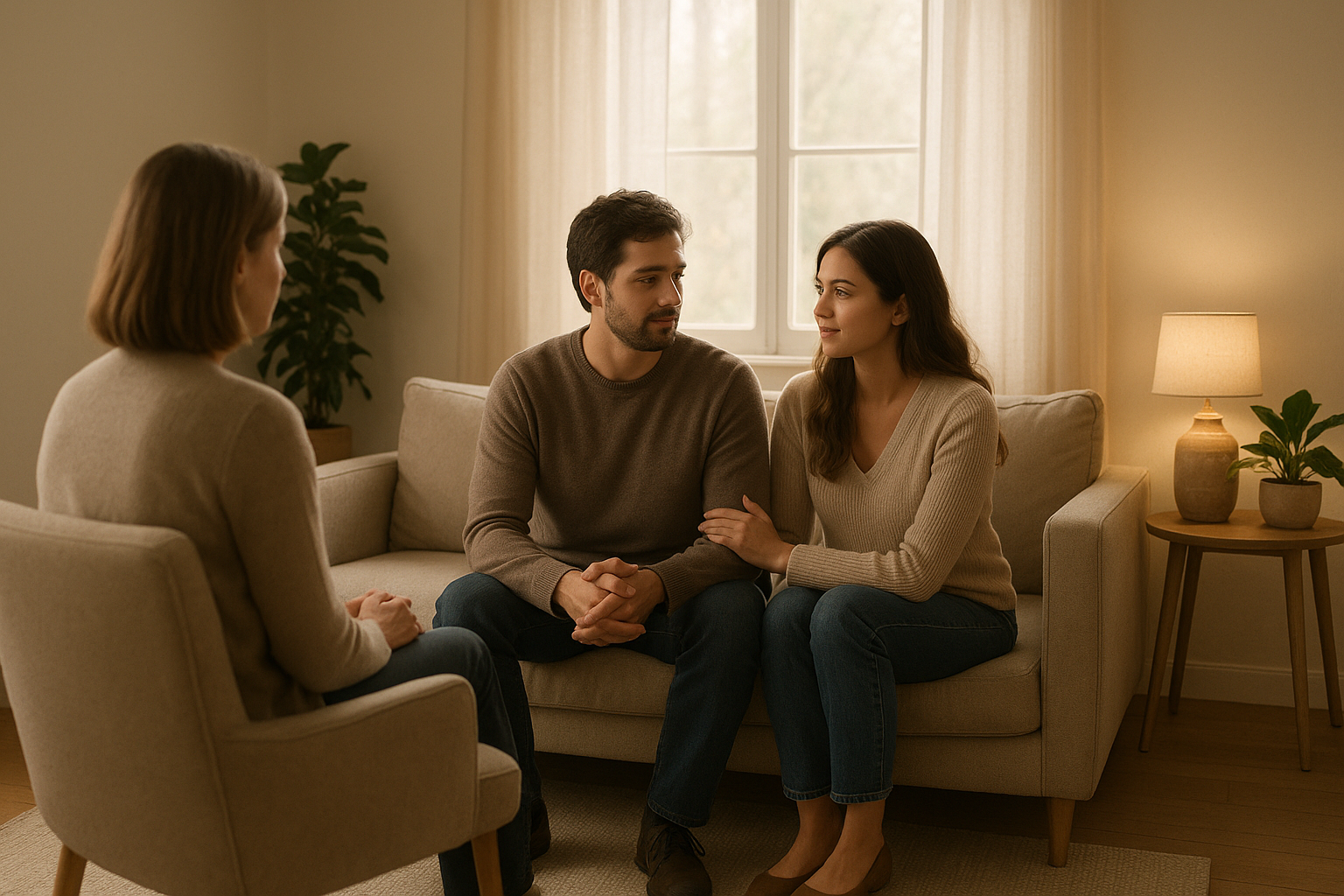
A calm, private setting supports compassionate counseling for couples from the very first session.
What Is Compassionate Counseling for Couples?
Compassionate counseling for couples is a form of relationship therapy built on warmth, patience, and genuine curiosity about each partner’s experience. Rather than assigning blame, the therapist helps both people understand the emotions underneath their arguments. In particular, this style of counseling draws on a humanistic approach, meaning the relationship is viewed as capable of growth and repair at any stage.
As a result, sessions often feel less like a courtroom and more like a guided conversation. For instance, a therapist might slow down a heated exchange to ask what each partner is actually afraid of losing. Consequently, couples start to see conflict as information about unmet needs rather than evidence that the relationship is failing.
Why an Attachment-Informed, Humanistic Approach Matters
Attachment theory, first developed through research on early caregiver bonds, explains why adults respond to closeness and distance the way they do (Wikipedia, Attachment Theory). In couples work, this means a partner who shuts down during conflict may be protecting themselves from old fears of rejection, not simply being distant on purpose.
Because the body often holds onto stress before the mind can name it, many therapists also integrate body-aware techniques. These may include breathwork, visualization, or Progressive Muscle Relaxation to calm the nervous system before a difficult conversation begins. Similarly, EMDR (Eye Movement Desensitization and Reprocessing) is sometimes used when past trauma is quietly shaping present-day reactions between partners. The American Psychological Association notes that evidence-based couples interventions can meaningfully improve relationship satisfaction when applied consistently (APA, Couples Therapy).
How Compassionate Couples Therapy Works: A Step-by-Step Overview
Although every relationship is different, the process of starting compassionate counseling for couples generally follows a predictable path. Below is an overview of what that journey often looks like from first contact through ongoing care.
- Schedule Your Free Consultation. Reach out and book a free 15-minute consultation to describe what is happening in the relationship and ask questions about the therapeutic approach before committing to sessions.
- Complete Your Initial Assessment Session. Attend a longer first session where the therapist gathers background on each partner’s history, communication patterns, and specific goals for the relationship.
- Build Safety and Mutual Awareness. Work together to establish ground rules for respectful dialogue and begin noticing emotional and physical reactions that arise during hard conversations.
- Engage in Emotional Processing Work. Use techniques such as guided dialogue, breathwork, or EMDR to process grief, trauma, or conflict affecting the relationship’s trust and safety.
- Practice New Communication Patterns. Apply new listening and expression skills between sessions, gradually replacing defensive habits with calmer, more attuned responses.
- Maintain Progress With Ongoing Check-Ins. Shift to less frequent sessions once stability improves, returning periodically to reinforce progress and address new challenges.
For a deeper look at applying these steps to specific conflict patterns, the guide to couples counseling for relationship issues walks through common scenarios in more detail.
Who Benefits From Compassionate Relationship Counseling
Compassionate relationship counseling tends to help couples facing a wide range of situations, not just those in crisis. Grief and loss, for example, can quietly strain a partnership when each person processes sorrow differently. Likewise, infidelity, chronic conflict, or a major life transition such as a new baby or job loss can disrupt the emotional rhythm two people once shared.
Importantly, this type of counseling is also explicitly open to traditional and non-traditional couples, including ethically non-monogamous (ENM) relationships. Each relationship structure brings its own communication needs, and a therapist experienced with varied relationship styles can adapt accordingly. Couples navigating ongoing tension may find it useful to review this resource on support for relationship conflicts, while those recovering from betrayal might explore how counseling supports overcoming infidelity through counseling.

Active, nonjudgmental listening is central to compassionate relationship counseling.
In-Person and Telehealth Options Across California
Many couples prefer meeting in person, especially for the first few sessions, because shared physical space can make emotional safety easier to feel. In-person compassionate counseling for couples is available in Westlake Village and nearby communities such as Agoura Hills, Calabasas, Thousand Oaks, and Oak Park.
On the other hand, telehealth has become a practical option for California residents who live farther away or have demanding schedules. According to the National Institute of Mental Health, structured talk therapy delivered remotely can be as effective as in-person care for many presenting concerns (NIMH, Psychotherapies). Couples weighing divorce or separation may also benefit from reading about couples counseling for divorce recovery before making a decision.
What to Expect in Your First Session
Before anything else, most practices offer a free 15-minute consultation so couples can ask questions without pressure. During this call, it helps to mention the main concerns bringing you in, whether that is communication breakdown, grief, or trust. Afterward, the first full session usually focuses on gathering history and setting goals rather than solving every problem at once.
At Carter Psychotherapy, that process reflects over 30 years of clinical experience working with grief, trauma, anxiety, and relationship concerns. The practice can be reached at (747) 213-6735 or Brent@carterpsychotherapy.com, with in-person sessions held at 30700 Russell Ranch Road, Suite 250, Westlake Village, CA 91362. Those exploring couples-specific issues in more depth can also visit the couples therapy services page or the practice’s homepage for additional resources.

Telehealth extends compassionate counseling for couples to clients across California.
Frequently Asked Questions
What is compassionate counseling for couples?
Compassionate counseling for couples is a therapeutic approach that combines emotional attunement, attachment-informed techniques, and nervous-system regulation to help partners communicate and reconnect. It focuses on creating a nonjudgmental space where both people feel heard.
How long does couples therapy take to work?
Many couples notice small shifts within four to eight sessions, though deeper patterns often take several months to change. Progress depends on the issues involved and how consistently both partners engage in the process.
What is the difference between couples counseling and individual therapy?
Couples counseling treats the relationship itself as the client, focusing on communication patterns between both partners. Individual therapy, by contrast, centers on one person’s internal experience, history, and coping strategies.
Do you offer telehealth couples counseling in California?
Yes, telehealth sessions are available to couples located anywhere in California. This allows partners in Los Angeles County, Ventura County, or beyond to access the same compassionate, attachment-informed care as in-person clients.
How much does couples counseling typically cost?
Fees vary by practice, session length, and whether insurance applies. Many therapists, including Carter Psychotherapy, offer a free 15-minute consultation so couples can ask about rates before committing to ongoing sessions.
What happens during the free 15-minute consultation?
The consultation is a brief, no-pressure conversation to discuss what is happening in the relationship and whether the therapeutic approach feels like a good fit. It also gives couples a chance to ask practical questions about scheduling and fees.
Can non-traditional or ENM couples get support here?
Yes, traditional and non-traditional relationships, including ethically non-monogamous (ENM) couples, are explicitly welcomed. The therapeutic approach adapts to each relationship’s unique structure and goals.
How does attachment theory inform couples therapy?
Attachment theory explains how early bonding experiences shape the way adults seek closeness, respond to conflict, and manage fear of disconnection. Therapists use this framework to help couples understand reactive patterns and build more secure connection.
What are common mistakes couples make before seeking therapy?
Many couples wait until resentment has built up for years, or they avoid naming problems directly for fear of conflict. Others try to fix everything alone without learning new communication tools, which can deepen disconnection over time.
How do I know if my relationship needs counseling?
Signs include repeated arguments that never resolve, emotional distance, difficulty trusting one another, or a major life change such as grief or infidelity. If these patterns persist, compassionate counseling for couples can help uncover what is driving them.
Is EMDR used in couples therapy?
EMDR, or Eye Movement Desensitization and Reprocessing, is sometimes integrated into couples work when past trauma is affecting the current relationship. It helps process difficult memories so they carry less emotional charge in the partnership.
What should I expect in my first couples therapy session?
The first session usually involves gathering background on the relationship, each partner’s goals, and current challenges. Expect open-ended questions and a calm, structured conversation rather than quick advice or judgment.
How often should couples attend therapy sessions?
Weekly sessions are common during the early stages, allowing momentum to build between meetings. As the relationship stabilizes, many couples shift to biweekly or monthly check-ins to maintain progress.
Taking the Next Step Toward Connection
Ultimately, choosing compassionate counseling for couples is a decision to invest in understanding rather than avoidance. Whether a relationship is navigating grief, rebuilding trust after infidelity, or simply feeling disconnected after years together, a humanistic and attachment-informed approach offers a steady, nonjudgmental path forward. With over 30 years of experience supporting individuals, couples, and families throughout Westlake Village and California, compassionate counseling for couples at Carter Psychotherapy welcomes traditional and non-traditional relationships alike through both in-person and telehealth sessions. If this resonates, booking a free 15-minute consultation is a low-pressure way to start the conversation and take the next step toward a more connected relationship.
Leave a Reply