Therapy for relationship communication is often the turning point for couples who feel unheard, dismissed, or stuck in repetitive arguments. When conversations keep breaking down, even strong relationships can start to feel lonely. Carter Psychotherapy, based in Westlake Village, California, offers a humanistic and attachment-informed approach to communication-focused counseling for traditional and non-traditional couples alike. In addition, sessions may include nervous-system regulation techniques that help partners stay calm enough to actually hear one another. This article explains how therapy for relationship communication works, what the first session looks like, and how to find support in person or through telehealth.
Direct answer: Therapy for relationship communication is a form of couples counseling that identifies unhealthy conversation patterns, such as criticism, shutting down, or avoidance, and replaces them with structured, compassionate dialogue. It typically combines talk-based methods with awareness and nervous-system tools so both partners can stay engaged during difficult conversations.

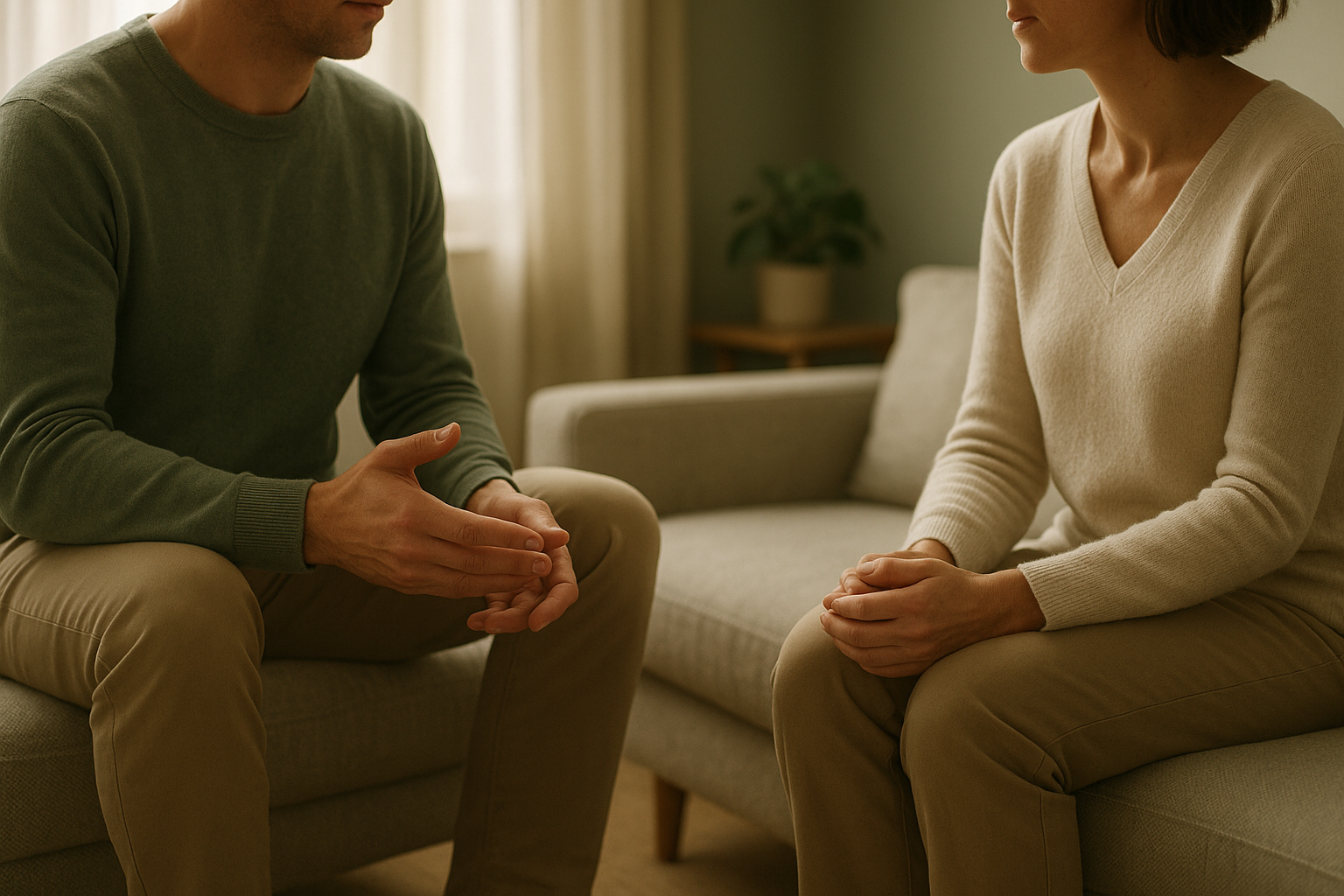
Therapy for relationship communication helps couples slow down and really hear each other.
What Is Therapy for Relationship Communication?
Therapy for relationship communication is counseling that helps partners notice how they talk, listen, and react during conflict. Rather than only discussing the topic of an argument, a therapist helps couples slow down, observe emotional reactions, and practice new ways of expressing needs. As a result, couples often feel more understood and less defensive.
This approach draws heavily on Attachment Theory, which explains how early relationship patterns shape adult reactions to closeness, conflict, and distance. For example, a partner who fears abandonment may raise their voice during disagreements, while a partner who fears engulfment may withdraw. Specifically, communication-focused therapy helps both people recognize these patterns without assigning blame.
At Carter Psychotherapy, the approach is humanistic, which means the therapist focuses on each person’s unique experience rather than applying a rigid formula. Furthermore, the practice integrates body-aware techniques, since physical tension and nervous-system arousal often drive miscommunication just as much as the words being said. For a deeper look at how this plays out in session, the complete guide to therapy for relationship challenges covers additional context.
Signs Your Relationship May Need Communication-Focused Therapy
Not every disagreement signals a serious problem. However, certain patterns suggest that communication-focused therapy could help before the distance grows wider.
- The same argument repeats without ever reaching resolution.
- One or both partners shut down, go silent, or leave during conflict.
- Criticism or contempt has started to replace curiosity and warmth.
- Difficult topics, such as finances or intimacy, are consistently avoided.
- Either partner feels unheard even after trying to explain their perspective.
- Non-traditional or ENM relationship structures create unique conversations that feel hard to navigate alone.
If several of these signs feel familiar, therapy for relationship communication can offer a structured, neutral space to practice healthier patterns before resentment builds further.
How Couples Counseling Improves Communication Patterns
Couples counseling improves communication patterns by giving both partners a shared language and a safe structure for difficult conversations. In particular, a therapist often slows down heated moments and asks each partner to reflect back what they heard before responding. This simple pause, consequently, reduces misunderstandings and defensiveness.
Carter Psychotherapy’s couples therapy services also draw on Family Systems concepts, recognizing that each partner brings history, habits, and expectations shaped by their family of origin. As a result, sessions often explore not just the current disagreement but the deeper pattern behind it.
Techniques used may include dialogue-based exercises, visualization, journaling, and EMDR when trauma is contributing to reactive communication. Similarly, breathwork and Progressive Muscle Relaxation help partners regulate their nervous system before responding, which supports clearer and calmer dialogue over time.
The Body-Aware, Attachment-Informed Approach at Carter Psychotherapy
With more than 30 years of experience, Carter Psychotherapy emphasizes a compassionate, nonjudgmental relationship between therapist and client. This matters because communication skills are easier to learn in a space that feels genuinely safe rather than clinical or rushed.
The practice’s body-aware approach means attention is paid to physical cues, such as a tightening chest or clenched jaw, that often appear before words do. Therefore, clients learn to notice these signals early, which creates an opportunity to pause before a conversation turns into conflict. You can learn more about this approach and request a consultation directly through Carter Psychotherapy.
Importantly, this work is not limited to traditional couples. Non-traditional relationships, including ethically non-monogamous partnerships, are explicitly welcomed, since communication challenges and attachment patterns show up across all relationship structures.
What to Expect in Your First Session
Starting therapy for relationship communication can feel intimidating, but the process is generally straightforward. Below is a typical sequence couples can expect.
- Schedule a free consultation. Book a free 15-minute initial consultation by phone or video to describe your communication concerns and ask questions before committing to ongoing sessions.
- Share your relationship history. During the first full session, both partners describe how the relationship began and when communication problems first started to repeat.
- Build awareness with body-aware exercises. The therapist introduces grounding or breathwork techniques so each partner can notice physical reactions before they escalate into conflict.
- Practice new dialogue skills. Couples practice structured speaking and listening exercises together, learning to reflect back what they heard without judgment.
- Create an ongoing plan. The therapist and couple agree on session frequency, home practice, and checkpoints to measure progress over time.

A calm, private setting supports open conversation during relationship communication therapy.
Telehealth vs In-Person Therapy for Communication Issues in California
Couples often ask whether telehealth works as well as meeting in person. In many cases, it does, especially for communication-focused work that relies on dialogue and reflection rather than physical interventions.
Carter Psychotherapy offers telehealth to clients anywhere in California, which is helpful for couples in Thousand Oaks, Agoura Hills, Calabasas, or elsewhere who prefer the convenience of meeting from home. On the other hand, some couples value the focused environment of an office visit. The benefits of in-person couples therapy often include fewer distractions and a stronger sense of shared presence during sessions held in Westlake Village.
Either format can support meaningful progress. According to research summarized by the American Psychological Association, structured couples therapy is associated with improved relationship satisfaction for a majority of participants who complete treatment, regardless of session format. For a closer look at outcome data specific to communication problems, the article on whether couples therapy is effective for communication issues explores this further.
What the Research Says About Communication and Relationship Outcomes
Communication problems are frequently cited as a leading factor in relationship breakdowns. In fact, research associated with the Gottman Institute has repeatedly found that how couples handle conflict, rather than whether they disagree at all, predicts long-term relationship stability. This is one reason communication-focused therapy targets the pattern of an argument, not just its content.
Chronic relationship conflict can also affect individual wellbeing. The National Institute of Mental Health notes that ongoing interpersonal stress can contribute to anxiety and sleep disruption, which in turn can make communication even harder. Breaking this cycle early, therefore, supports both the relationship and each partner’s individual health. The research breakdown in how effective therapy is for relationship problems offers additional detail on these findings.
Frequently Asked Questions About Therapy for Relationship Communication
What is therapy for relationship communication?
Therapy for relationship communication is counseling that helps partners recognize unhealthy conversation patterns and replace them with clearer, more compassionate dialogue. It focuses on how couples talk and listen, not just what they disagree about.
How does therapy for relationship communication actually work?
A therapist observes how a couple interacts, slows down reactive moments, and teaches structured ways to express needs and feelings. Over time, partners practice these skills both in session and at home.
Why do couples struggle with communication in long-term relationships?
Communication often breaks down when stress, unresolved hurt, or mismatched attachment styles build up over time. Partners may stop feeling safe enough to be fully honest, which leads to avoidance or conflict.
How long does couples communication therapy take to show results?
Many couples notice small shifts within the first four to eight sessions, though deeper patterns may take longer. Progress depends on consistency, willingness to practice new skills, and the severity of underlying issues.
What is the difference between individual therapy and couples communication therapy?
Individual therapy focuses on one person’s inner experience, while couples communication therapy centers on the dynamic between both partners. Some clients benefit from combining both approaches.
How much does therapy for relationship communication cost?
Costs vary by provider, session length, and location, and many practices offer a free initial consultation before any fees apply. It is best to ask directly about rates during that first conversation.
Does Carter Psychotherapy offer telehealth for couples communication therapy?
Yes, Carter Psychotherapy offers telehealth sessions to clients located anywhere in California, in addition to in-person appointments in Westlake Village. This allows couples flexibility if travel or scheduling is difficult.
Can non-traditional or ENM couples benefit from communication-focused therapy?
Yes, non-traditional and ethically non-monogamous couples can benefit from the same communication-focused techniques used with traditional couples. Carter Psychotherapy explicitly welcomes traditional and non-traditional relationship structures.
What common mistakes do couples make before starting therapy?
Many couples wait until resentment has built up for years, or they rely only on friends and family for advice instead of a trained therapist. Others avoid therapy out of fear that it means the relationship is failing, when early support often prevents bigger problems.
What techniques are used in body-aware communication therapy?
Body-aware communication therapy may include breathwork, Progressive Muscle Relaxation, and nervous-system regulation exercises alongside dialogue-based methods. These techniques help partners stay calm enough to actually hear each other during difficult conversations.
How do I know if we need couples therapy versus just talking it out?
If the same argument keeps repeating without resolution, or one or both partners shut down during conflict, professional support can help. A therapist offers tools and a neutral space that everyday conversation often cannot provide.
Is a free initial consultation available before committing to therapy?
Yes, Carter Psychotherapy offers a free 15-minute initial consultation so couples can ask questions and determine fit before scheduling a full session. This call can be done by phone or video.
What should we expect emotionally during the first few sessions?
It is common to feel a mix of relief, nervousness, or vulnerability as old patterns are named out loud for the first time. A skilled therapist paces sessions to keep both partners feeling safe and supported.
How is attachment theory used in relationship communication therapy?
Attachment theory helps explain why certain conversations trigger strong reactions, such as fear of abandonment or a need for control. Understanding these attachment patterns allows couples to respond with more compassion instead of defensiveness.
Conclusion: Taking the Next Step Toward Better Communication
Therapy for relationship communication offers couples a structured, compassionate way to break repetitive patterns and rebuild trust. Whether the goal is reducing conflict, reconnecting after a difficult season, or simply learning to listen more fully, communication-focused counseling provides practical tools grounded in attachment theory and body awareness. With more than 30 years of experience, Carter Psychotherapy supports individuals, couples, and families across Westlake Village, Agoura Hills, Calabasas, and California statewide through telehealth. A free 15-minute consultation is an easy, low-pressure way to see whether this approach fits your relationship. For immediate support, call or text 988 for the Suicide & Crisis Lifeline, or call 911; this website is not monitored for emergencies.
Leave a Reply