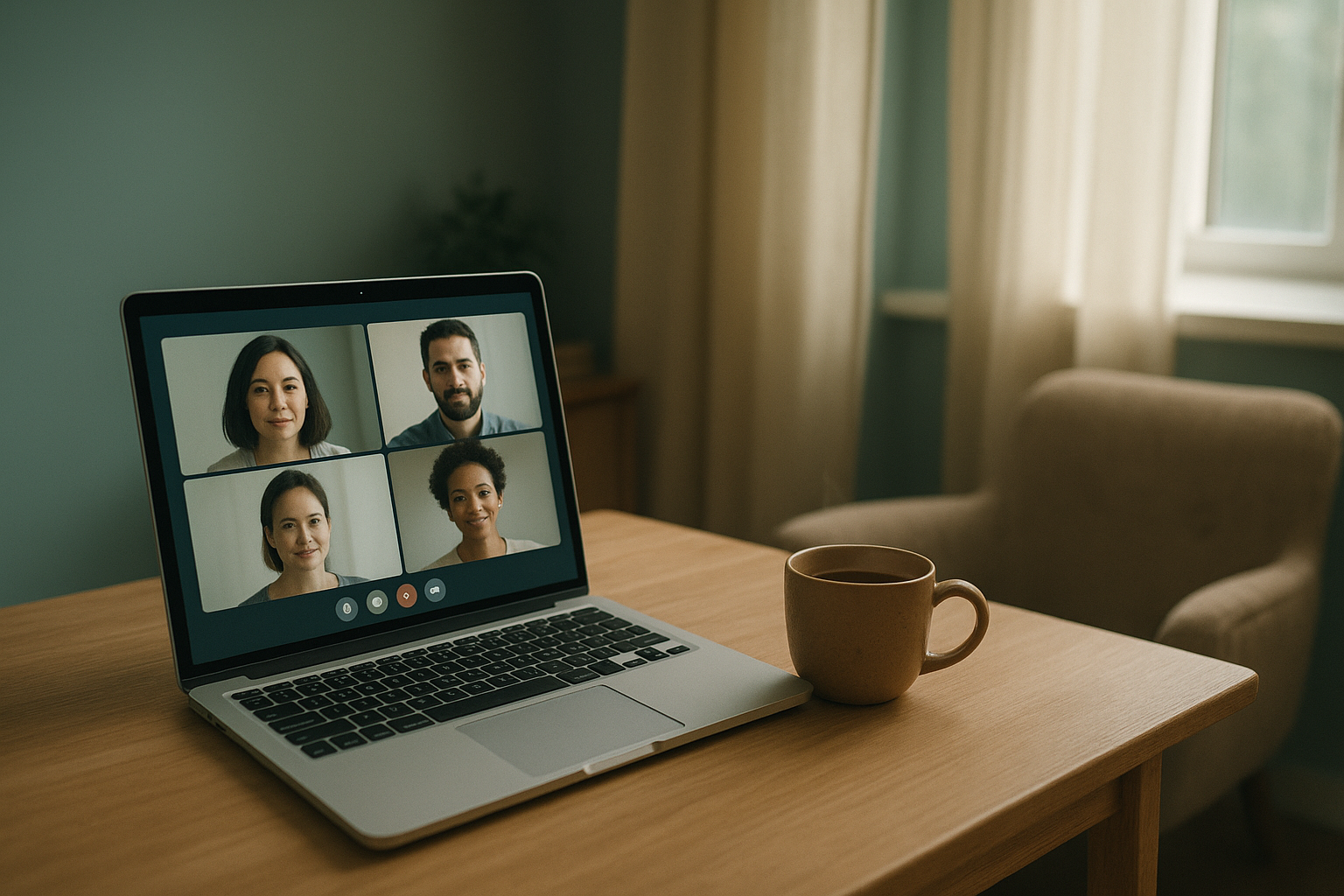
Virtual mental health services let you meet with a licensed therapist over live video, phone, or secure messaging, so professional support is available without ever driving to an office. Therefore, anyone dealing with anxiety, depression, relationship conflict, or a rocky life transition can get real clinical care from a bedroom, a parked car, or a quiet corner of the office. In fact, this model removes the practical roadblocks that used to stop people from starting therapy at all, such as long commutes, rigid office hours, or a shortage of local specialists. As a result, individuals, couples, and families are increasingly choosing telehealth counseling as a flexible, evidence-based way to protect their mental health.
Quick Answer: Virtual mental health services are therapy and counseling sessions delivered through secure video calls, phone calls, or messaging platforms, connecting you to a licensed therapist without an in-person office visit. They treat the same range of concerns as traditional therapy — including anxiety, depression, trauma, grief, and relationship difficulties — and, importantly, research shows they are just as effective for most people.

Virtual mental health services make it easy to meet with a therapist from a comfortable, private space. For a deeper walkthrough, see our Mental Health Counseling: What to Expect & How to Start.
What Are Virtual Mental Health Services?
Virtual mental health services are professional counseling and psychotherapy sessions conducted remotely, typically over live video, phone, or a secure messaging portal. Specifically, a licensed clinician meets with you at a scheduled time using a HIPAA-compliant platform — software built to keep your health information private and legally protected. Consequently, the clinical process mirrors traditional office therapy: building rapport, exploring concerns, and applying evidence-based techniques to support real change.
Unlike a casual phone call with a friend, these sessions are structured, confidential, and led by trained professionals such as licensed clinical social workers, psychologists, or licensed professional counselors. Because the format is flexible, many providers, including Carter Psychotherapy, offer both in-person and telehealth options so clients can choose whichever format fits their lifestyle and comfort level.
Types of Virtual Mental Health Services You Can Choose From
Not every telehealth appointment looks the same. In particular, understanding the different formats helps you pick the one that fits your comfort level and schedule.
- Live video sessions — the closest experience to an in-office visit, with real-time facial expressions and body language that support connection.
- Phone sessions — useful when internet access is unreliable or when a client prefers not to be on camera.
- Secure live chat — real-time typed conversation through an encrypted portal, often chosen for its privacy and lower social pressure.
- Asynchronous messaging — clients send messages throughout the day or week, and the therapist responds during set hours, which suits flexible schedules but is generally best paired with regular live sessions.
Above all, no single format is universally “best.” Instead, the right choice depends on your comfort with technology, the severity of your concerns, and how much face-to-face interaction helps you feel supported.
How Do Online Therapy Sessions Work?
Getting started is generally simple. First, you book an appointment through a practice’s scheduling system. Then, at session time, you log into a secure video link from a phone, tablet, or computer. In most cases, no downloads are required beyond a standard web browser.
During the session, the therapist and client interact much like they would in an office — discussing goals, processing emotions, and practicing coping strategies. Afterward, some practices also offer secure messaging between sessions for check-ins, which can further support progress. For a detailed walkthrough of what a first appointment actually feels like, this guide on telehealth psychotherapy — what to expect and how it works covers the entire process step by step. Likewise, if you are wondering how to find a provider who supports this format, this guide on finding a therapist who does telehealth sessions walks through it in detail.

Modern telehealth platforms make joining a session as easy as opening an app.
Benefits of Telehealth Counseling and Remote Mental Health Care
There are several reasons people choose remote mental health care over traditional office visits. Above all, convenience stands out: sessions can happen from home, work, or while traveling, which removes commute time and scheduling friction. In addition, telehealth counseling widens access to specialists who may not be located nearby, which matters for anyone seeking a specific therapeutic approach or a niche specialty.
Furthermore, many clients report feeling more comfortable opening up from a familiar environment. According to the American Psychological Association, telehealth use for mental health care expanded dramatically in recent years and has remained a mainstream option well beyond the initial shift, as reported on apa.org. Similarly, the National Institute of Mental Health notes that increased access to care is one of telehealth’s most significant public health benefits.
Potential Drawbacks: Is Virtual Care Right for You?
Virtual mental health services are not automatically the right fit for every situation, and a trustworthy resource should say so plainly. For example, some clients undergoing intensive trauma work benefit from the grounding presence of an in-person room. Similarly, a home environment that lacks privacy — such as a shared apartment or a house full of children — can make it harder to speak openly during sessions.
Technology can also introduce friction: a spotty internet connection or an unfamiliar app may distract from the clinical work itself. Consequently, it’s worth honestly assessing your home setup, your comfort with technology, and the nature of your concerns before committing fully to a virtual format. In many cases, a hybrid approach — combining occasional in-person visits with regular virtual sessions — offers the best of both worlds.
Who Can Benefit From Virtual Mental Health Services?
Virtual mental health services suit a wide range of people, not just those in remote areas. For instance, busy professionals, parents, and caregivers often appreciate skipping travel time. Likewise, individuals with mobility limitations or chronic health conditions may find remote sessions far more accessible than an in-office visit.
Couples also benefit significantly, since coordinating two schedules for in-person appointments can be difficult. Research summarized in this overview of whether online couples counseling is actually effective shows that virtual formats can produce outcomes comparable to face-to-face sessions when both partners are engaged. If your relationship needs deeper repair work, this resource on online marital counseling to rebuild your relationship outlines what that process looks like, and this guide to online couples therapy — what to expect and how it works explains exactly how joint sessions are structured.
What Do Virtual Mental Health Services Cost — and Does Insurance Cover Them?
Cost is often the first question people ask, and understandably so. Generally, virtual sessions with a licensed private-practice therapist cost the same as in-person visits, typically between $100 and $250 per session before insurance is applied. In contrast, large subscription-based apps sometimes advertise lower weekly rates, but they may limit live video time or rely more heavily on messaging-based check-ins.
Fortunately, most major insurance plans now cover telehealth counseling at parity with office visits, a shift accelerated in recent years. Even so, coverage details vary by plan, state, and provider network. Therefore, it’s wise to call your insurer directly and ask three things: whether telehealth is covered, whether your chosen therapist is in-network, and what your copay or deductible looks like for virtual visits.
How to Get Started With Virtual Mental Health Services
Starting therapy online does not need to feel overwhelming. Instead, breaking the process into clear steps makes it manageable:
- Identify your needs and goals. Reflect on what you want support with, such as anxiety, depression, a relationship challenge, or a major life transition, so you can search for a therapist with relevant experience.
- Research licensed telehealth providers. Look for licensed mental health professionals who offer telehealth appointments in your state, checking credentials, specialties, and client reviews before deciding.
- Confirm insurance and technology requirements. Contact your insurance provider to verify telehealth coverage, and make sure you have a stable internet connection and a compatible device.
- Schedule an initial consultation. Book a first appointment to discuss your goals, ask questions about the therapist’s approach, and see whether the fit feels right.
- Prepare a private space for sessions. Choose a quiet, confidential location, test your camera and microphone beforehand, and set aside distraction-free time for each appointment.
For more detail on what that first appointment actually involves, revisit the walkthrough in the telehealth psychotherapy expectations guide above.
Choosing the Right Licensed Therapist Online
Selecting a provider is one of the most important steps in this process. Specifically, confirm that the clinician holds an active license in your state, since licensing requirements are location-specific. Beyond credentials, consider whether the therapist specializes in your primary concern, such as trauma, anxiety, or couples work.
Moreover, many people find it helpful to schedule a brief consultation call before committing to ongoing sessions. This guide on how to find a licensed therapist online who is the right fit outlines useful questions to ask during that first conversation. Additionally, if you are searching more broadly, this resource on finding individual therapy near you covers both in-person and virtual options side by side.
Red Flags to Watch For
- A provider who won’t confirm their license number or state of practice.
- Vague or missing information about who actually provides the “counseling” — coach versus licensed clinician.
- Pressure to commit to long-term subscriptions before a single consultation.
- No clear privacy policy or unclear answers about how session data is stored.
Privacy, Security, and HIPAA: What to Expect
Confidentiality is central to effective therapy, so it matters just as much online as it does in person. Reputable providers use encrypted, HIPAA-compliant video platforms — meaning they meet the U.S. federal standards for protecting health information, detailed by the U.S. Department of Health and Human Services. In practice, this means your sessions are not recorded or stored insecurely, and only you and your clinician have access to session content.
Even so, you play a role in protecting your own privacy. Therefore, hold sessions in a room with a closed door, use headphones when possible, and avoid public Wi-Fi for sensitive conversations. If you ever have doubts, simply ask your therapist directly what platform they use and how client data is protected — a trustworthy clinician will answer without hesitation.
When Virtual Care Isn’t Enough: Crisis Resources and Safety Planning
Important: Virtual mental health services are not designed for emergencies. If you or someone you know is in immediate danger or experiencing a mental health crisis, call or text 988 to reach the 988 Suicide & Crisis Lifeline, or go to your nearest emergency room.
Beyond emergencies, it’s still smart to talk with your therapist early on about a safety plan — what to do if a session drops due to a technical issue, and how to reach support between appointments if things feel unmanageable. In particular, ask whether your provider offers any after-hours protocol. Above all, remember that virtual care is a powerful tool for ongoing support, but it works alongside, not instead of, emergency services when a true crisis arises.
Are Virtual Mental Health Services Effective?
Evidence increasingly supports the effectiveness of remote care. In particular, studies comparing teletherapy to in-person therapy for anxiety and depression frequently find similar outcomes, with the therapeutic relationship mattering more than the delivery format. Consequently, many clients continue with virtual care long-term simply because it fits better into their lives.
Still, virtual formats are not identical to office visits in every respect. For example, some clients prefer in-person sessions for certain types of trauma work or when technology access is limited. To explore the range of formats available, this overview of virtual therapy session options can help you decide what fits your situation, and the Wikipedia entry on telehealth offers useful background on how the field developed.

Secure, private connections make virtual mental health services a trustworthy option for ongoing care.
5 Tips to Get the Most From Your Virtual Therapy Sessions
- Treat it like an in-office appointment. Log in a few minutes early and avoid multitasking during the session.
- Use headphones. This improves audio clarity and adds an extra layer of privacy at home.
- Keep a notebook nearby. Jot down insights or homework your therapist assigns between sessions.
- Test your setup ahead of time. Check your camera, microphone, and internet connection before your very first session.
- Give it a few sessions. As with any therapy, rapport builds over time, so avoid judging fit after a single meeting.
Frequently Asked Questions About Virtual Mental Health Services
What are virtual mental health services?
Virtual mental health services are therapy and counseling sessions delivered online through secure video, phone, or messaging platforms instead of an in-person office visit. They cover the same concerns as traditional therapy, including anxiety, depression, trauma, and relationship issues. For a deeper walkthrough, see our Therapy for Trauma Recovery: A Complete Guide to Healing.
How do virtual mental health services work?
You schedule a session through a secure telehealth platform, log in from your computer or phone at the appointment time, and meet with your licensed therapist over video or phone just as you would in an office.
Are virtual mental health services as effective as in-person therapy?
Research generally shows that teletherapy produces outcomes comparable to in-person therapy for common concerns like anxiety and depression. Effectiveness largely depends on the client-therapist relationship rather than the format of delivery. For a deeper walkthrough, see our Therapy for Relationship Challenges: Complete Guide.
How much do virtual mental health services cost?
Costs vary by provider and location, but virtual sessions often cost the same as in-person therapy, typically between $100 and $250 per session before insurance. Many insurance plans now cover telehealth counseling at the same rate as office visits.
How long does a typical online therapy session last?
Most online therapy sessions last between 45 and 55 minutes, similar to standard in-person appointments. Couples sessions may run slightly longer, often 60 to 75 minutes.
What technology do I need for virtual mental health services?
You need a reliable internet connection, a computer, tablet, or smartphone with a camera and microphone, and a private space. Most practices use HIPAA-compliant video platforms that require no special software beyond a web browser or a simple app.
Is my information private and secure during telehealth sessions?
Reputable providers use HIPAA-compliant, encrypted video platforms specifically designed to protect client confidentiality. It is still wise to confirm your therapist’s privacy policy and hold sessions in a private location.
Can virtual mental health services treat anxiety and depression?
Yes, virtual mental health services are widely used to treat anxiety and depression using the same evidence-based approaches applied in person, such as cognitive behavioral therapy. Many clients find the convenience actually improves consistency and outcomes.
What common mistakes should I avoid when starting online therapy?
Common mistakes include choosing a noisy or public space, skipping the technology check before your first session, and not verifying that your therapist is licensed in your state. Taking a few minutes to prepare helps sessions run smoothly.
What’s the difference between virtual mental health services and traditional in-person therapy?
The core therapeutic process is the same; the main difference is the delivery method. Virtual sessions happen over video or phone, offering more flexibility, while in-person therapy requires traveling to a physical office. For a deeper walkthrough, see our Virtual Therapy Sessions: What to Expect & How They Work.
Does insurance cover virtual mental health services?
Many insurance plans cover virtual mental health services at parity with in-person visits, especially since telehealth coverage expanded significantly in recent years. It is best to confirm coverage details directly with your insurer before booking.
How do I choose the right online therapist?
Look for a licensed clinician in your state who specializes in your area of concern, and consider scheduling an initial consultation to assess fit. Comfort, trust, and clear communication matter as much as credentials.
Can couples use virtual mental health services together?
Yes, many practices offer online couples counseling where both partners join the same video session from one or separate locations. Research suggests virtual couples therapy can be just as effective as meeting in an office.
Can virtual mental health services include medication management?
Some telehealth practices connect clients with a psychiatrist or psychiatric nurse practitioner who can evaluate, prescribe, and manage medication remotely, alongside talk therapy. However, availability depends on your state’s regulations and the specific practice.
What should I do if I’m in a mental health crisis during a virtual session?
Tell your therapist immediately, since most have a crisis protocol in place. If you are ever in immediate danger, call or text 988 to reach the Suicide & Crisis Lifeline or go to the nearest emergency room right away.
Are virtual mental health services appropriate for teens and children?
Yes, many licensed providers offer virtual sessions for adolescents and, in some cases, younger children, often with parent involvement. It’s important to confirm the therapist has specific training in child or adolescent care before starting.
Final Thoughts
In summary, virtual mental health services have become a reliable, accessible way to receive professional support without leaving home. Whether you are managing anxiety, working through a relationship challenge, or simply want a more flexible schedule, telehealth counseling offers the same evidence-based care found in traditional offices — while also giving you the tools to evaluate cost, privacy, and safety along the way. Ultimately, the right next step is finding a licensed provider who fits your needs, confirming your insurance and technology setup, and scheduling that first conversation. If you are ready to explore your options, visiting carterpsychotherapy.com is a practical place to start learning more about available telehealth appointments.
Leave a Reply