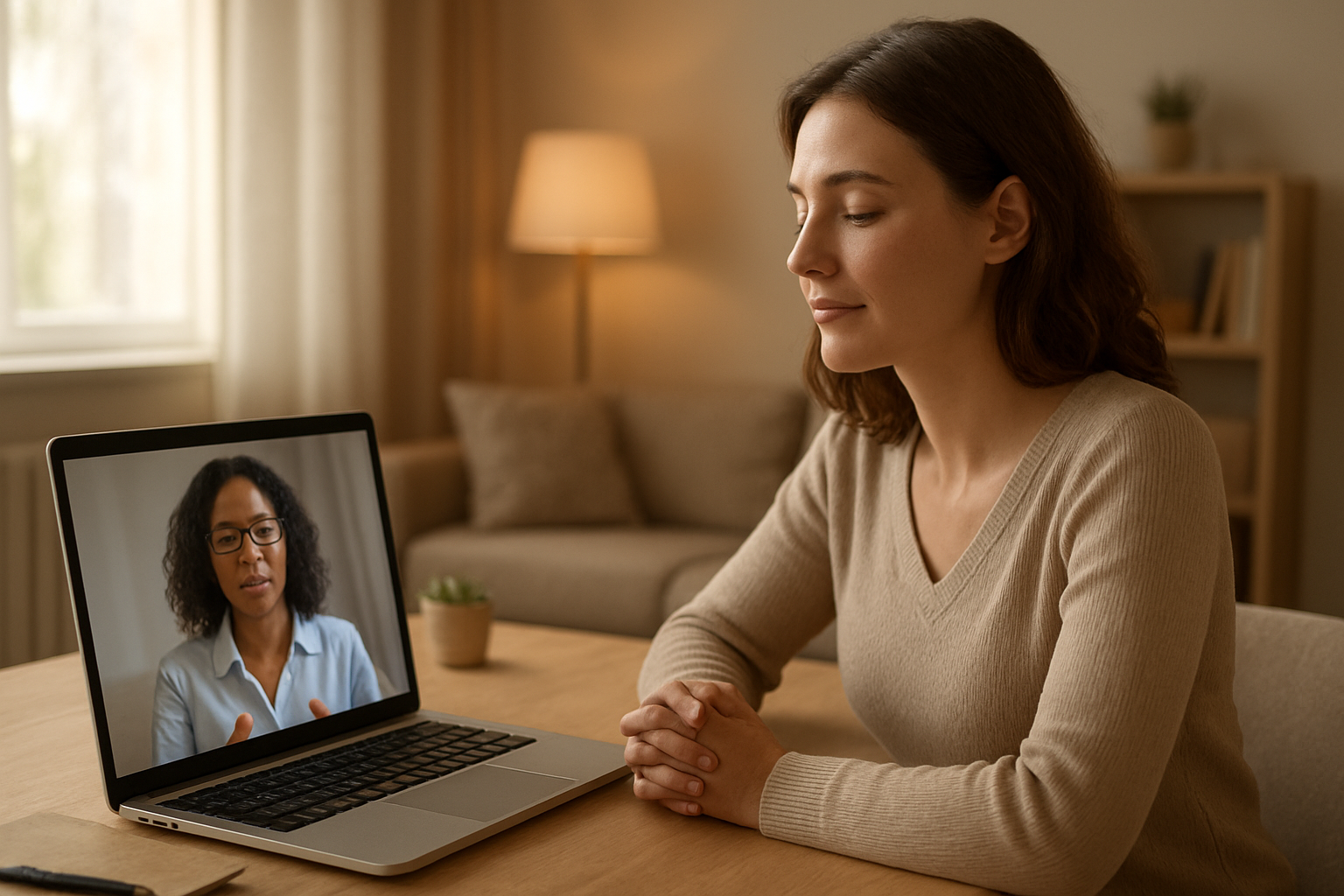
Online therapy for anxiety has become one of the most accessible ways to get professional support without leaving home. Instead of driving to an office, you connect with a licensed therapist through secure video, phone, or messaging platforms, often within days of reaching out. For many people managing worry, racing thoughts, or panic symptoms, this format removes barriers like transportation, scheduling conflicts, and the discomfort of a waiting room.
Quick Answer: Online therapy for anxiety uses secure video or phone sessions with a licensed clinician to deliver evidence-based treatments, such as cognitive behavioral therapy, from wherever you feel most comfortable. It is generally as effective as in-person care for most people and often easier to fit into a busy life.
What Is Online Therapy for Anxiety?
Online therapy for anxiety is a form of mental health treatment where a licensed clinician meets with clients through video calls, phone sessions, or secure text-based platforms rather than in a physical office. Consequently, clients receive the same clinical techniques, such as cognitive behavioral therapy (a structured approach that helps identify and change unhelpful thought patterns), without needing to travel anywhere.
This model, sometimes called teletherapy or telehealth counseling, has grown rapidly because it fits modern life. In particular, people with demanding jobs, caregiving responsibilities, or limited access to local specialists benefit from the flexibility virtual sessions provide. As a result, many practices, including anxiety-focused counseling services, now offer telehealth as a standard option alongside in-person appointments.

Online therapy for anxiety allows clients to speak with a licensed therapist from the comfort of home.
How Virtual Anxiety Treatment Actually Works
Once you book an appointment, the process closely mirrors traditional therapy. First, you complete an intake form describing your symptoms and history. Then, during the first session, your therapist asks questions to understand your specific anxiety patterns, whether that involves generalized worry, social anxiety, or panic attacks.
Afterward, sessions typically occur weekly or biweekly, lasting 45 to 60 minutes. Therapists commonly use structured methods such as cognitive behavioral therapy, exposure techniques, or mindfulness-based strategies. Because these approaches rely on conversation and guided exercises rather than physical proximity, they translate well to a screen. In addition, many platforms allow secure messaging between sessions for added support, which can be especially helpful during difficult weeks.
Benefits of Teletherapy for Anxiety Disorders
Teletherapy for anxiety disorders offers several practical advantages beyond convenience. For instance, clients often report feeling more relaxed discussing sensitive topics from a familiar environment, which can accelerate openness early in treatment. Similarly, virtual sessions eliminate commute time, making it easier to maintain consistent attendance, a factor closely tied to treatment success.
Furthermore, online formats expand access for people in rural areas or those with mobility limitations who might otherwise struggle to find a nearby specialist. According to the National Institute of Mental Health, anxiety disorders affect approximately 19% of adults in the United States annually, making accessible treatment options a significant public health need (NIMH, 2024). Given that scale, flexible delivery methods like telehealth play an important role in closing treatment gaps.
Did you know? Studies published in peer-reviewed journals have found that internet-delivered cognitive behavioral therapy produces outcomes comparable to face-to-face treatment for anxiety in many cases. This supports online therapy for anxiety as a credible, evidence-backed option rather than a lesser substitute.
How to Get Started with Online Anxiety Counseling
Starting treatment can feel overwhelming, especially when anxiety itself makes decision-making harder. Therefore, breaking the process into clear steps often reduces that initial hesitation.
- Identify your needs and goals. Consider which symptoms, such as worry, panic, or avoidance, bother you most and what change would mean for your daily life.
- Research licensed providers. Look for clinicians who specialize in anxiety and explicitly offer telehealth sessions.
- Verify insurance or fees. Contact the practice or check a resource like the fee and insurance page to understand costs upfront.
- Schedule an initial consultation. Use this first meeting to share your history and ask questions about their approach.
- Prepare your space and technology. Choose a private, quiet location and test your camera and microphone beforehand.
- Commit to consistent sessions. Regular attendance, paired with practicing coping skills between appointments, tends to produce the best results.
Is Online Therapy for Anxiety Effective?
Yes, online therapy for anxiety is generally considered effective for most people, particularly for mild to moderate symptoms. However, effectiveness depends heavily on the strength of the client-therapist relationship and consistency of attendance rather than the delivery format alone.
In more complex cases, such as anxiety intertwined with unresolved trauma, a therapist may recommend integrating specialized approaches. For example, someone whose anxiety stems from past traumatic experiences might benefit from trauma-focused therapy alongside anxiety-specific techniques. Likewise, anxiety triggered by loss may respond well to combined support through grief and loss counseling. In contrast, straightforward generalized anxiety often responds well to standard cognitive behavioral techniques delivered virtually.

Preparing a calm, private space helps clients get the most from each anxiety-focused telehealth session.
Online Therapy for Anxiety vs. In-Person Sessions
Choosing between virtual and in-person care often comes down to personal preference and practical circumstances. On one hand, in-person therapy offers a traditional setting some clients find grounding, along with easier reading of subtle body language cues. On the other hand, online sessions remove travel time, offer more scheduling flexibility, and can feel less intimidating for clients newer to therapy.
Notably, neither format is universally superior. Instead, the right choice depends on individual comfort, technology access, and the complexity of the concerns being addressed. Many practices, including this one, offer both options so clients can choose or even switch formats as their needs evolve.
What to Expect in Your First Virtual Anxiety Therapy Session
During your first session, expect a conversation focused on understanding your history rather than immediate problem-solving. Your therapist will likely ask about symptom onset, triggers, and any previous treatment attempts. Additionally, they may explain confidentiality practices and how the telehealth platform works.
Above all, this session establishes trust and direction. Therefore, it helps to arrive with a general sense of your goals, even if they feel vague at first. As sessions continue, your therapist will collaboratively refine a treatment plan suited to your specific anxiety presentation, drawing from resources such as those outlined on carterpsychotherapy.com.
Choosing the Right Therapist for Online Anxiety Treatment
Selecting a therapist matters as much as choosing the format itself. Specifically, look for licensure, direct experience treating anxiety disorders, and a communication style that feels comfortable during an initial consultation. Practices like Carter Psychotherapy emphasize a compassionate, client-centered approach, combining evidence-based techniques with a warm therapeutic style suited to adults and couples navigating anxiety, life transitions, and related concerns.
Ultimately, the strongest predictor of success is the working relationship between client and therapist. As a result, it is worth scheduling a brief consultation before committing to ongoing sessions, ensuring the fit feels right from the start.
Frequently Asked Questions About Online Therapy for Anxiety
What is online therapy for anxiety?
Online therapy for anxiety is professional counseling delivered through video calls, phone sessions, or secure messaging instead of in-person visits. It uses the same evidence-based approaches as traditional therapy, such as cognitive behavioral therapy, to help clients manage anxious thoughts and physical symptoms.
How effective is online therapy for anxiety compared to in-person sessions?
Research suggests online therapy for anxiety is comparable in effectiveness to face-to-face treatment for many people. Outcomes depend more on therapeutic fit and consistency than the format itself.
How much does online therapy for anxiety cost?
Costs vary by provider, session length, and insurance coverage, typically ranging from $65 to $200 per session. Many practices offer sliding scale fees or accept insurance to reduce out-of-pocket expense.
How long does it take to see results from online anxiety counseling?
Many clients notice some improvement within 6 to 8 sessions, though timelines vary by individual and severity. Consistent attendance and practicing coping skills between sessions tend to speed progress.
Is online therapy for anxiety private and secure?
Reputable providers use HIPAA-compliant video platforms and encrypted messaging to protect client confidentiality. Always confirm your therapist uses secure, compliant technology before starting sessions.
What technology do I need for a virtual anxiety therapy session?
You typically need a smartphone, tablet, or computer with a stable internet connection, a camera, and a microphone. A quiet, private space also helps you feel comfortable speaking openly.
Can online therapy help with panic attacks and physical symptoms of anxiety?
Yes, therapists can teach grounding techniques, breathing exercises, and cognitive strategies during virtual sessions that directly address panic symptoms. These skills work the same whether taught in person or through a screen.
What is the difference between online therapy for anxiety and self-help apps?
Online therapy involves a licensed clinician who personalizes treatment and monitors progress, while apps typically offer generic exercises without professional guidance. For moderate to severe anxiety, working with a therapist usually produces better outcomes.
Does insurance cover online therapy for anxiety?
Many insurance plans now cover telehealth mental health services at the same rate as in-person visits. It is best to verify coverage details directly with your insurer and prospective therapist before booking.
What are common mistakes people make when starting online anxiety counseling?
Common mistakes include choosing a therapist without checking credentials, skipping sessions when feeling better, and not finding a private space for calls. Setting a consistent schedule and being honest with your therapist improves results.
Can online therapy for anxiety include medication management?
Talk therapists typically do not prescribe medication, but many collaborate with psychiatrists or primary care providers who can. Some practices offer integrated telehealth psychiatry alongside counseling.
Is online therapy for anxiety suitable for severe cases or trauma-related anxiety?
Online therapy can effectively treat many severe anxiety and trauma-related cases, though some situations may benefit from a hybrid approach with occasional in-person sessions. A licensed clinician can help determine the best format during an initial consultation.
How do I choose the right therapist for online anxiety treatment?
Look for a licensed clinician with specific experience treating anxiety disorders, check reviews or credentials, and schedule a consultation to assess comfort and communication style. Fit between client and therapist strongly influences treatment success.
Final Thoughts
In summary, online therapy for anxiety offers a flexible, evidence-based path toward managing worry, panic, and related symptoms without the barriers of traditional office visits. Whether you are dealing with generalized anxiety, panic attacks, or anxiety connected to past trauma or loss, virtual sessions can deliver the same quality of care as in-person treatment when matched with the right therapist. Above all, taking that first step, whether through a consultation or simply researching providers, often marks the beginning of meaningful, lasting change. If you are ready to explore support, resources like those available through Carter Psychotherapy can help you find a format and approach that fits your life.
Leave a Reply